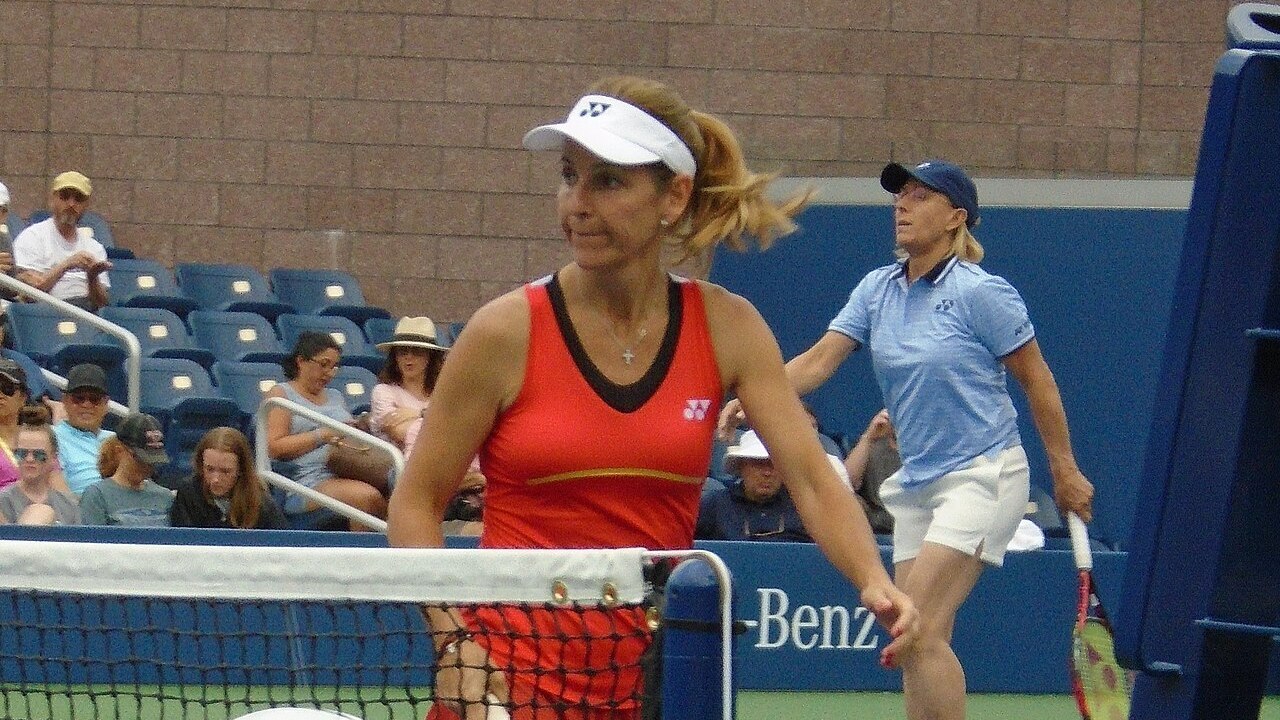
Two weeks ago, Alex Eala was sitting at a career-high No. 29 in the world — the highest ranking ever achieved by a Filipino tennis player. Today, she's No. 45.
If you only saw the number, you might panic. A 16-spot drop sounds like a crisis. But this isn't a story about a player falling apart. It's a story about math — specifically, the sometimes cruel arithmetic of the WTA ranking system. And once you understand how that math works, Eala's ranking drop starts to look less like a problem and more like an inevitability she was always going to face.
Here's what's actually going on.
How WTA Rankings Really Work
The WTA uses a rolling 52-week system. A player's ranking is based on her best results from up to 18 tournaments over the previous year. Rankings update every Monday.
The key word is rolling. When a tournament's 52-week anniversary arrives, the points a player earned there the previous year drop off her total automatically. To keep her ranking, she needs to match or beat that result. Fall short, and the points disappear — no matter how well she's playing everywhere else.
Think of it like a subscription that auto-renews every year at each tournament. Miss the renewal, and you lose those points.
For context, here's what the biggest tournaments — the WTA 1000 events — pay out at key rounds:
- Champion: 1,000 points
- Semifinal: 390 points
- Round of 16: 120 points
- Round of 32: 65 points
Those numbers matter a lot for what happened to Eala this month.
The Miami Math
Rewind to March 2025. Eala entered the Miami Open as a wildcard, ranked No. 140 in the world. Nobody expected much. Then she beat Jelena Ostapenko, Madison Keys, and world No. 2 Iga Świątek — in straight sets, 6-2, 7-5 — on her way to the semifinal. She eventually fell to Jessica Pegula in three sets, but she'd just earned 390 ranking points from a single tournament.
That semifinal run was the rocket fuel that powered her rise from No. 140 to, eventually, No. 29.
Fast-forward to March 2026. Miami rolls around again, and those 390 points come up for defense. Eala entered as the 31st seed — a wildcard turned seed in just 12 months. She earned a first-round bye (worth 10 points) and won two matches before running into Karolina Muchova in the Round of 16.
The result: 6-0, 6-2 to Muchova.
Do the math: Eala earned 120 points for reaching the R16, but she lost the 390 she'd earned at the semifinal a year earlier. Net loss: 270 ranking points. That's the single biggest reason her ranking dropped from No. 29 to No. 45.
It wasn't a collapse. It was the bill coming due for one extraordinary tournament run.
The Czech Curse
There's another pattern worth paying attention to. Eala's loss to Muchova in Miami wasn't an isolated case — it extended her professional record against Czech players to 0-13.
Zero wins. Thirteen losses. Against an entire country.
The recent stretch has been particularly rough. At Indian Wells, she lost to Linda Nosková 6-2, 6-0 in the Round of 16. Two weeks later at Miami, Muchova beat her 6-0, 6-2 in the same round. Combined, Eala won just 4 games out of 28 across those two matches.
Earlier in the year, she also fell to Tereza Valentova in the first round at Doha.
ESPN's Miguel Alfonso Caramoan has called it the "Czech curse," and it's hard to argue. Something about Czech opponents seems to consistently trouble Eala. At some point, this record will need to break. But right now, 0-13 is the kind of stat that demands attention.
What the Rest of Her Season Actually Looks Like
Here's where the narrative shifts. Because while the Miami points defense was painful, it was also the biggest single hit Eala faces all year — and it's already behind her.
Looking at her 2026 season as a whole, the picture is actually encouraging. She's 14-8 on the year with $487,364 in prize money. Her results include a semifinal in Auckland, quarterfinals in Abu Dhabi and Dubai (where she beat Jasmine Paolini and Sorana Cirstea before falling to Coco Gauff), and Round of 16 finishes at both Indian Wells and Miami.
She also beat Gauff at Indian Wells — 6-2, then Gauff retired at 0-2 in the second set — proving she can compete with the very best on the tour.
Now the calendar turns to clay, and here's where it gets interesting.
Why Clay Season Is Actually an Opportunity
Eala's career clay court record — roughly 42% wins — is her weakest surface on paper. But context matters.
Most of those clay losses came earlier in her career, at lower levels, when she was still developing. She trains daily on red clay at the Rafa Nadal Academy in Manacor, Spain. And crucially, her 2025 clay results — the ones she needs to "defend" this year — were minimal.
At Roland Garros 2025, she lost in the first round, earning zero points. At Oeiras, she won one match before losing in the second round. That means the clay season is almost entirely upside for Eala. She has virtually no points to defend and everything to gain.
Her upcoming schedule starts with the Upper Austria Ladies Linz (WTA 500, April 6-12), followed by the major clay events: Madrid (WTA 1000, April 21 – May 3), Rome (WTA 1000, May 4-17), and Roland Garros (May 17 – June 7).
Even a couple of deep runs on clay would add significant points to her total, potentially pushing her ranking back up. A strong showing at Madrid or Rome — both WTA 1000 events with big points on offer — could make a real difference.
The Bigger Picture
Eala's remaining points defense for the year looks manageable. The Miami semifinal was the mountain; the rest is more like rolling hills. She'll need to defend her 2025 Eastbourne final (roughly 180 points, due in June) and her 2025 Wimbledon second-round points (around 70, due in late June). Those are meaningful but nowhere near the 390-point cliff she just navigated.
The real story of 2026 isn't the ranking drop. It's the transformation it represents. A year ago, Alex Eala was a No. 140 wildcard pulling off the upset of the tournament. This year, she's a seeded player expected to win early rounds and contend in the second week. The expectations have changed because she has changed.
Dropping from No. 29 to No. 45 stings. But the math says this was always coming. And the math also says the hardest part of her points defense is over.
Now comes clay. And for a player with nothing to lose on the surface and everything to gain, that might be exactly where you want to be.