If you've only ever played on one type of surface, you might not realize how much the court under your feet changes the game. Switch from a hard court to clay and your slides become a feature, not a mistake. Move to synthetic turf and the bounce changes completely.
Here's what each surface does, what it costs, and which ones you'll actually find in the Philippines.
Hard Courts — The Philippine Default
If you play tennis in the Philippines, you're almost certainly playing on a hard court — an acrylic surface over asphalt or concrete. There's a reason: they're practical.
- Speed: Moderate — not as fast as grass, not as slow as clay
- Bounce: Consistent and high — the most predictable surface
- Maintenance: Low to moderate — sweep occasionally, resurface every few years
- Cost: $40,000-$105,000 per court
- Pros: Durable, all-weather (especially when covered), low upkeep, consistent play
- Cons: Harder on joints — the unforgiving surface can lead to knee and back issues over time
Hard courts host the US Open and Australian Open. They're the default surface globally, and for good reason — they reward all playing styles and require the least fuss.
Clay Courts — Rare but Beautiful
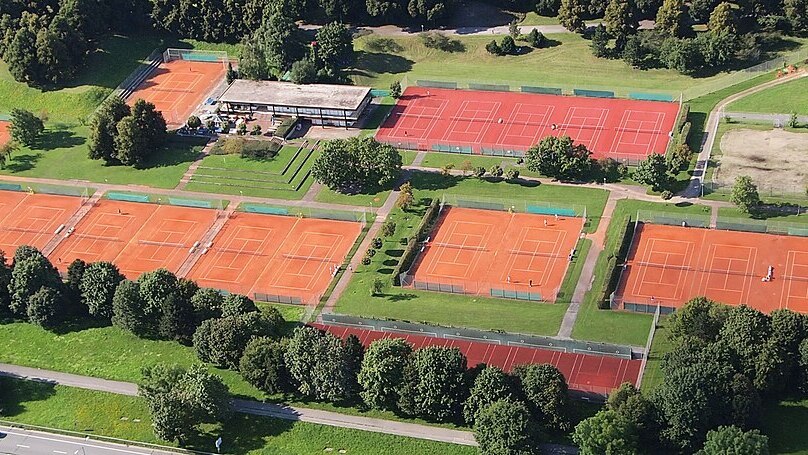
Clay courts are the romantic choice — the surface of the French Open, long rallies, and spectacular slides. In the Philippines, they're rare but not nonexistent. Asmara Urban Resort and Lifestyle Village in Cebu has three tan-clay courts, for example.
- Speed: Slow — the ball grabs the surface and loses pace
- Bounce: High and consistent, but slower
- Maintenance: High — requires regular watering, rolling, and brooming
- Cost: $35,000-$95,000 per court
- Pros: Softer on joints, allows sliding (easier on the body), produces longer rallies
- Cons: Messy, weather-sensitive (rain turns clay into mud), high maintenance demands
For the Philippine climate, clay courts present a challenge: tropical downpours can destroy a clay surface in minutes, and the constant maintenance is expensive. Beautiful? Yes. Practical? Not so much.
Synthetic Turf / Artificial Grass — The Practical Middle Ground
If hard courts are too harsh on joints and clay is too high-maintenance, synthetic turf offers a compelling middle path.
- Speed: Moderate
- Bounce: Moderate and consistent
- Maintenance: Low to moderate — occasional sand infill, watch for mold in humid conditions
- Cost: $25,000-$80,000 per court (the most affordable option)
- Pros: Quick drying after rain, softer than hard courts, low upkeep, good for tropical climates
- Cons: Sand infill needs regular attention, potential mold issues in humidity
Synthetic turf makes particular sense in the Philippines — it dries quickly after tropical rain, it's easier on aging joints, and it's the cheapest to install.
Natural Grass — The Unicorn
Wimbledon is played on grass. Almost nothing else is. For good reason.
- Speed: Fast — the ball skids and stays low
- Bounce: Low and unpredictable
- Maintenance: Very high — mowing, fertilizing, reseeding, constant attention
- Cost: $50,000-$110,000 per court (the most expensive)
- Pros: Soft, cool in heat, beautiful aesthetics
- Cons: Wears quickly, rain-sensitive, requires near-daily maintenance
In the Philippines, grass tennis courts are essentially nonexistent for recreational play. The maintenance demands are incompatible with the tropical climate. If you want the grass court experience, you'll need to travel.
The Verdict for Filipino Players
Hard courts dominate because they make the most sense: durable, low-maintenance, predictable, and — when covered with a shell roof — playable year-round regardless of weather. Synthetic turf is the smart alternative for facilities looking to be gentler on players' bodies. Clay is a luxury. Grass is a dream.
Know your surface. Play accordingly. And no matter what you're standing on — enjoy the game.