Our shoes roundup names the Nike Zoom GP Challenge 1 its Best Energy Return pick. This review answers what Filipino players want to know: does that springy feel hold up on Manila's outdoor hard courts, how does a heavy stability shoe cope with Philippine heat, and where can you actually buy it in the PH now that Nike sells the GP Challenge 1.5 instead?
Note: Rally PH has not playtested the GP Challenge 1. This review draws on Nike's product description, RunRepeat's independent lab data (published February 2024, updated July 2025), PAGASA heat data, and our check of PH retailers on 29 October 2026.
Specs at a glance
- Style codes: men FB3147 · women FB3148 (hard court). The clay version (FJ1813) and the newer GP Challenge 1.5 (IQ5176 / IQ5180) are different shoes.
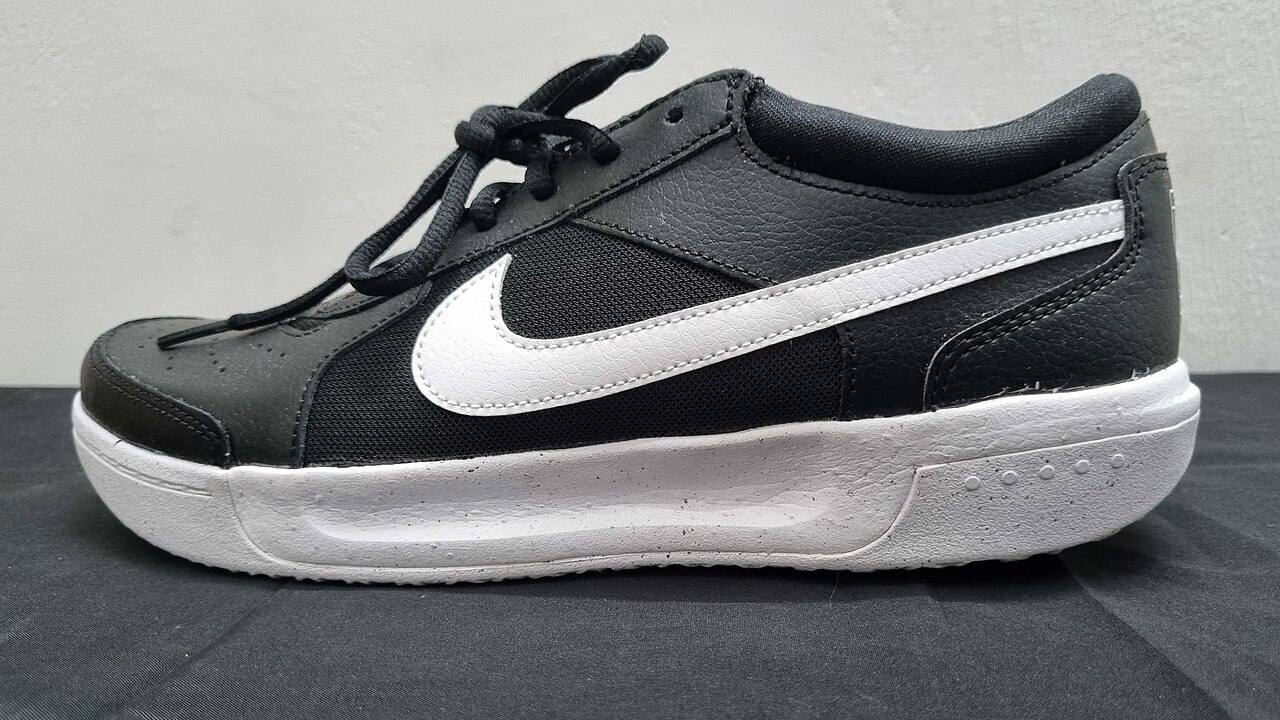
- Tech (as Nike describes it): a forefoot Air Zoom unit that "puts a pop in your first step" and a heel Air Zoom unit for support; a midfoot plastic plate for stability on quick cuts; webbing around the eyestays for a "hugged" fit; extra rubber on the big-toe side and high-abrasion rubber in the forefoot; a rocker-shaped heel for serve motions. RunRepeat identifies the main midsole as full-length Phylon foam.
- Weight: 417 g (14.7 oz) in a men's US 9, against a 363 g lab average (RunRepeat)
- Outsole thickness: 4.5 mm, against a 4.1 mm average (RunRepeat)
- Stack: heel 30.0 mm, forefoot 22.5 mm, 7.5 mm drop (RunRepeat)
- Sizing: Nike says it "fits small; we recommend ordering a half size up", and RunRepeat's readers agree.
Energy return: why it earns the label
This is the GP Challenge 1's headline strength, and the lab backs it up. RunRepeat measured "above-average energy return in both the heel (51.7%) and the forefoot (56.2%)", against a 50.1% forefoot average across 46 shoes, and rates it "High" where the Gel Resolution X and the cheaper GP Challenge Pro are "Moderate". In their playtest, "split steps and hard dashes to the net all felt charged and fast."
The reason is two Zoom Air units, one in the forefoot and one in the heel. The GP Challenge Pro has only the heel unit. A stiff platform (19.8 N vs a 16.4 N average) adds to the "jumping off a springboard" feel. The base foam itself is on the firm side (51.5 AC vs 48.0), but forefoot shock absorption is well above average, so you get bounce without a mushy ride. The trade-off: "very little court feel."
On Manila hard courts
Hard and shell courts dominate public play in Metro Manila, and the marquee public venues are hard. Rizal Memorial Tennis Center has newly resurfaced hard courts (₱600/hr by day and ₱1,000/hr from 5 PM through PSC booking), and CCP in Pasay has four outdoor hard courts. Rally's court directory tags venues such as Rizal Memorial, CCP, Kerry Sports Manila, Makati Sports Club, and Meralco as hard. Not sure what you play on? See our court surface guide.
The outsole is built for abrasive surfaces. In RunRepeat's Dremel test it lost 0.7 mm (average 0.8 mm), the rubber measured 87.3 HC (average 86.2), and at 4.5 mm it's thicker than most, "more than enough rubber to last longer than most tennis shoes". There's no outsole durability warranty. Forefoot traction measured 0.81 against a 0.76 average, and RunRepeat notes the grip is "initially very strong" and gives a little after break-in.
The weak spot is the upper. Toebox durability scored only 3/5: the Dremel left "a nearly see-through hole in the fabric", and RunRepeat lists "not enough protection for toe drags" as a con. Heavy toe-draggers should look at the ASICS Court FF 3.
Stability and fit
RunRepeat scored it 88 overall, with Stability 95, Cushioning 89, and Speed 72. Torsional rigidity is 5/5 ("practically impossible to twist the shoe"), and the heel is wider than average. RunRepeat calls it "more of a baseline-ready option as opposed to a speedy all-court shoe" and names it a top pick among hard-court tennis shoes. For a similar planted feel, compare the ASICS Gel Resolution X, which weighs the same 417 g.
The fit is roomy up front: the toebox is 96.0 mm at its widest (average 92.8 mm) and one of the tallest RunRepeat has measured, on what Nike calls its widest tennis last. Length runs small, so go half a size up.
Heat and weight: the honest caveat
PAGASA's "danger" heat index band is 42–51°C. In May 2026, forecasts reached 44°C at NAIA in Pasay and 43°C in Quezon City. That's where this shoe is weakest.
RunRepeat rated its breathability 3 out of 5, which is average. Late in their playtest they "could feel some of the heat and moisture being trapped inside the shoe", and concluded: "we cannot recommend it for playing in extra-warm climates." In fairness, they add that the mesh "still allows for better airflow than many other tennis shoes". It's also heavy at 417 g, "one of the heaviest tennis shoes we've ever tested", though the bouncy cushioning makes it feel lighter than that on foot.
If you play in Manila heat in this shoe, book early mornings or evenings, outside the 11 AM–3 PM window, and bring moisture-wicking socks or a spare pair.
Where to buy in the Philippines
On 29 October 2026 we checked 13 PH retailers and marketplaces. Here's what we found:
- Nike Philippines (nike.com/ph): no longer lists the original GP Challenge 1. It now sells the updated GP Challenge 1.5 at ₱8,595 (men's and women's). Nike describes the 1.5 with the same "Air Zoom units and side-to-side stability" line; retailers describe it as a light update with fit, weight, and durability tweaks.
- ZALORA PH: carries the cheaper one-Zoom-unit GP Challenge Pro at ₱6,295, not the GP Challenge 1.
- We didn't find the GP Challenge 1 at Toby's, Chris Sports, Sports Central, or the major PH sneaker resellers. We couldn't verify an official Lazada or Shopee listing.
Any remaining GP Challenge 1 pairs are sell-through stock, so check the size (half up), the style code (FB3147/FB3148), and authenticity before you buy.
Rally PH Verdict: 3.9 / 5
Pros: the best energy return in our shoes roundup (RunRepeat 56.2% forefoot, rated "High") from two Zoom Air units; excellent stability for baseliners (Stability 95, torsional rigidity 5/5); a thick 4.5 mm outsole that wears well on abrasive Manila hard courts; roomy, tall toebox.
Cons: only average breathability (3/5), and RunRepeat won't recommend it for extra-warm climates, a real issue in PH heat; heavy at 417 g; thin toe protection for toe-draggers; runs half a size small; no longer sold on Nike PH, where the 1.5 has replaced it; we haven't playtested it.
If you're a baseliner who wants a bouncy, locked-in shoe for Manila hard courts and you play mostly mornings or evenings, the GP Challenge 1 delivers the springiest ride in our roundup. If heat or weight is your main concern, pick a lighter, better-ventilated shoe.
Compare it with our other picks in Best Tennis Shoes for Hard Courts in Tropical Heat.